Grease vs. Lubricating Oil: Which Is Better for Your Equipment?
1. What Is the Difference Between Grease and Lubricating Oil?
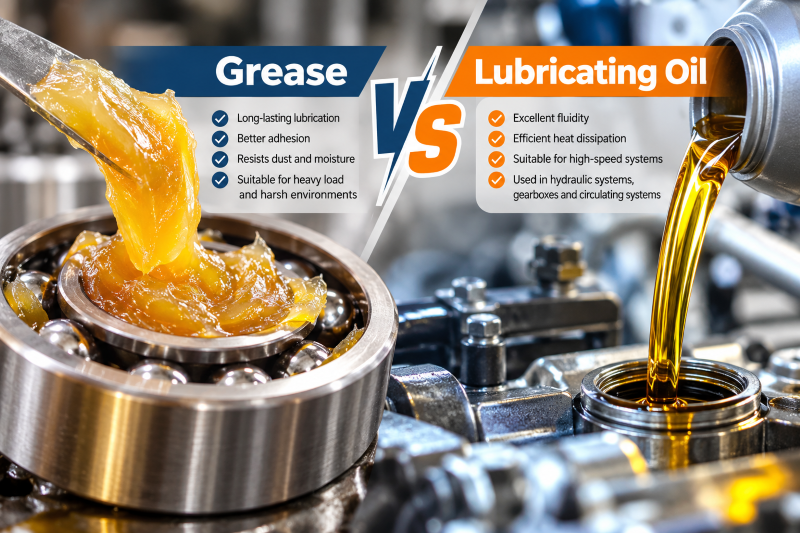
Grease and lubricating oil are two widely used industrial lubricants designed to reduce friction and protect moving components. Although both serve similar purposes, their compositions and performance characteristics make them suitable for different applications.
Grease is typically made from base oil, a thickener, and performance additives. Its semi-solid structure allows it to remain in place, providing long-lasting lubrication and helping protect components against moisture, dust, and contaminants.
Lubricating oil is a liquid lubricant formulated with base oil and additives. It flows easily through machinery, making it suitable for circulating lubrication systems, high-speed components, and applications requiring continuous heat removal.
2. Grease vs. Lubricating Oil: Key Differences
| Comparison | Grease | Lubricating Oil |
|---|---|---|
| Physical Form | Semi-solid | Liquid |
| Lubricant Retention | Stays in place | Flows and circulates |
| Leakage Risk | Generally lower | Higher in open or poorly sealed systems |
| Heat Dissipation | Relatively limited | Excellent in circulating systems |
| Maintenance | Often requires less frequent replenishment | May require regular monitoring and replacement |
| Typical Applications | Bearings, gears, slides, joints | Engines, hydraulic systems, gearboxes |
| Contamination Protection | Helps seal out dust and moisture | Depends on system sealing and filtration |
The right choice depends on equipment design, operating speed, temperature, load, and lubrication requirements rather than simply whether one lubricant is better than the other.
3. When Should You Choose Grease?
Grease is particularly suitable for components that need lubricant retention and reliable protection under demanding operating conditions.

Common applications include:
-
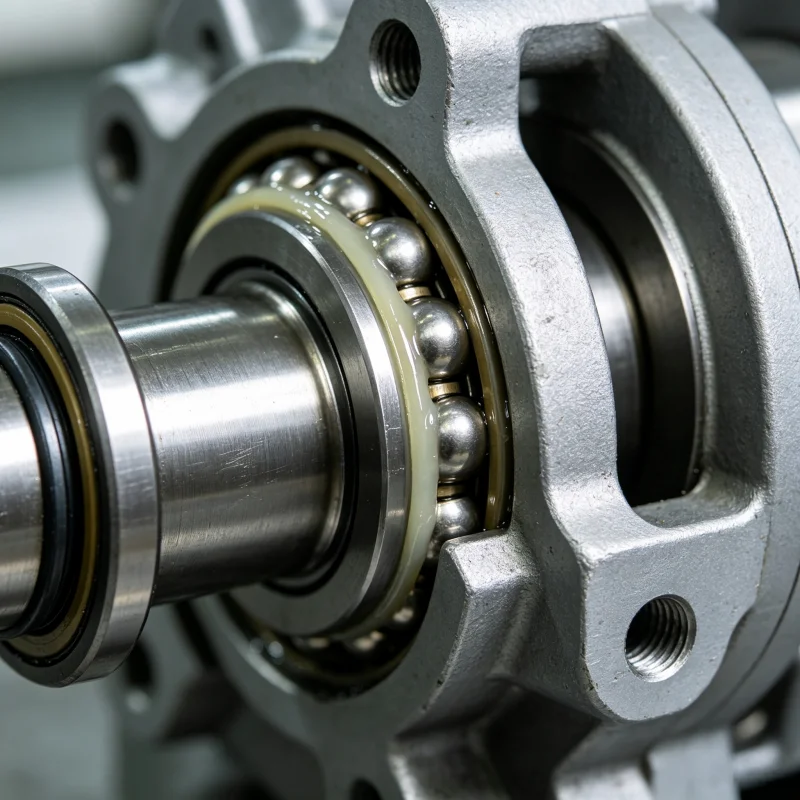
Industrial Bearings: Grease helps maintain a lubricating film and protect rolling bearings against wear and contamination.
-
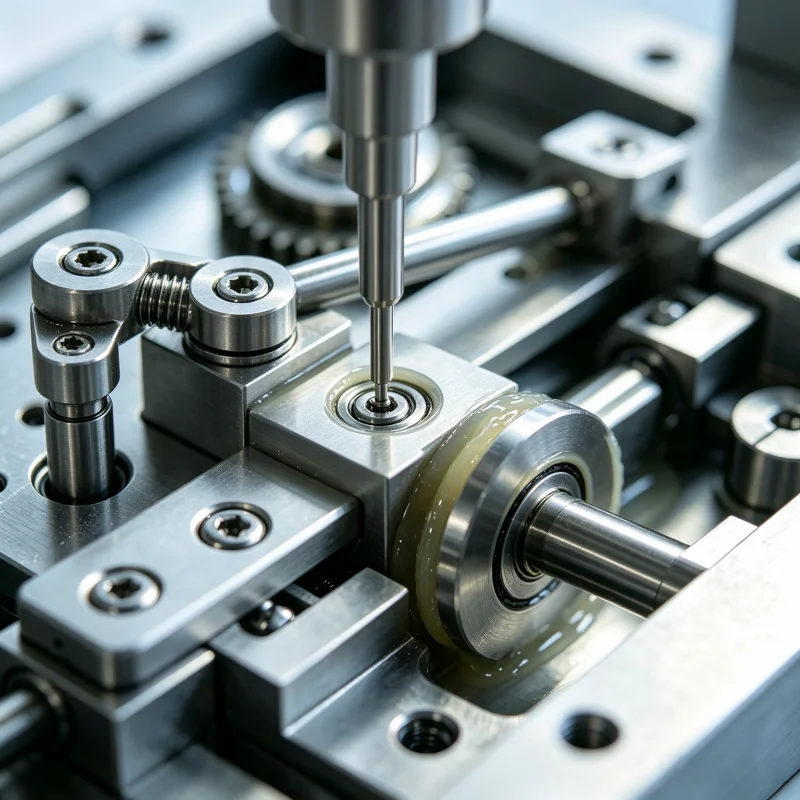
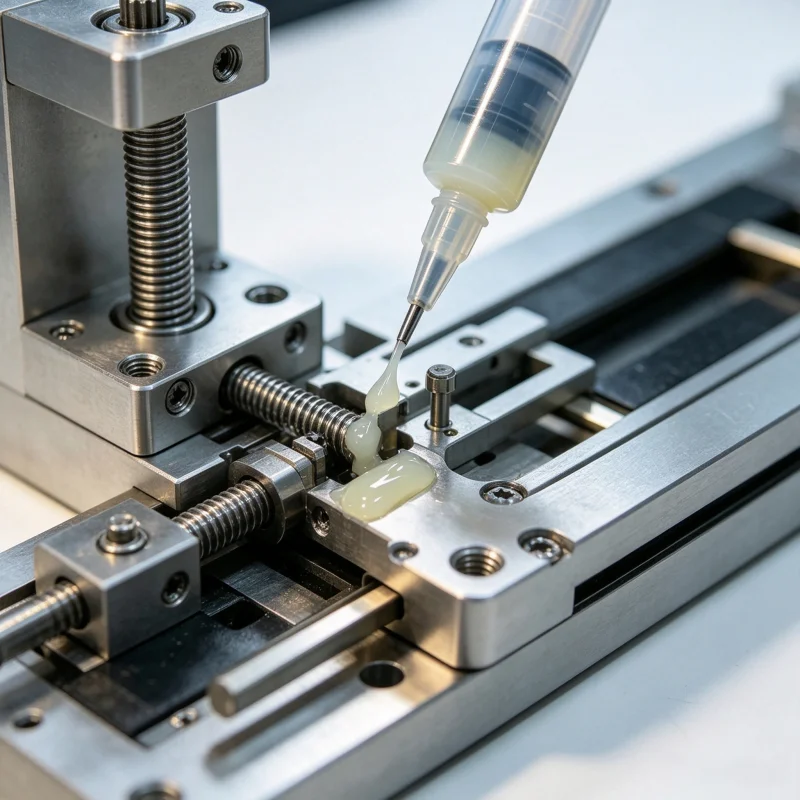
Linear Guides and Ball Screws: Specialized grease supports smooth movement and reduces friction in precision motion systems.
-
Electric Motors: Bearing grease helps protect motor bearings during continuous operation.
-
Industrial Robots: Grease is used in selected joints, gears, and moving components to support stable mechanical performance.
-
Automotive Components: Grease provides lubrication for chassis parts, wheel bearings, and various mechanical assemblies.
For equipment operating under heavy loads, vibration, moisture, or limited maintenance access, selecting the correct industrial grease can help extend service life and reduce unexpected downtime.
4. When Is Lubricating Oil a Better Choice?
Lubricating oil is generally preferred when equipment requires continuous oil circulation, efficient cooling, or lubrication across multiple moving components.
Typical applications include:
-
Hydraulic Systems: Hydraulic oil transfers power while lubricating pumps, valves, and other system components.
-
Industrial Gearboxes: Gear oil provides lubrication and helps dissipate heat generated during operation.
-
High-Speed Machinery: Oil circulation supports lubrication and heat removal in suitable high-speed applications.
-
Compressors: Compressor oil helps reduce friction, manage operating temperatures, and protect internal components.
-
Turbines and Circulation Systems: Lubricating oil provides continuous lubrication through dedicated oil supply systems.
When equipment generates significant heat or requires continuous lubricant circulation, oil is often the more practical solution.
5. Can Grease and Lubricating Oil Be Used Together?
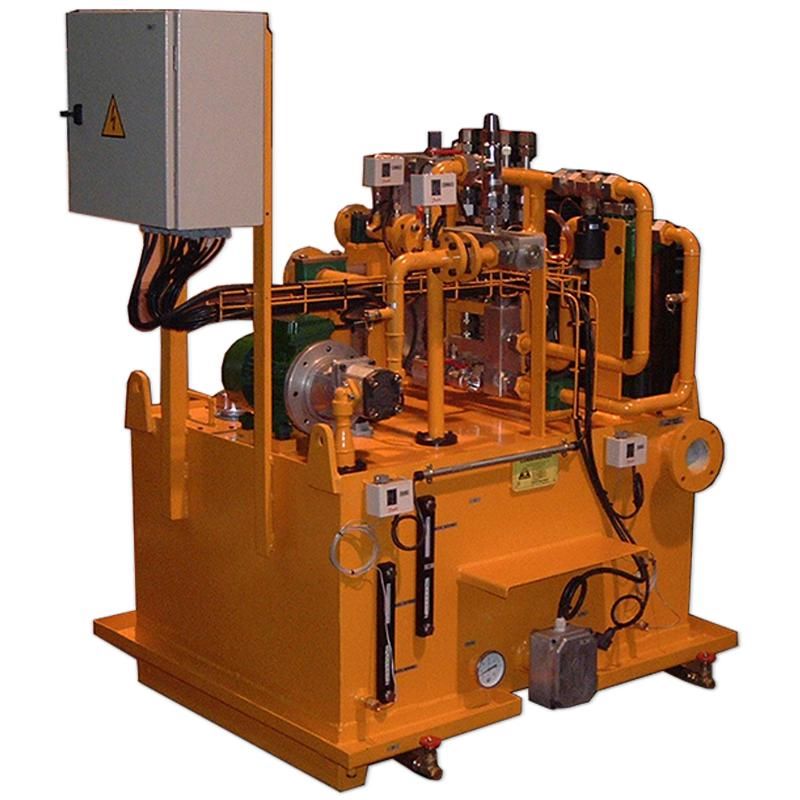
Yes. Some industrial machines use both grease and lubricating oil in different components.
For example, an industrial production line may use grease for bearing lubrication and linear guide systems, while lubricating oil serves hydraulic units and gearboxes.
However, grease and oil should not be substituted for each other without checking the equipment manufacturer's lubrication specifications. Their viscosity, thickener type, additive chemistry, and delivery methods must match the application requirements.
6. How to Choose the Right Lubricant for Your Equipment
Before selecting grease or lubricating oil, consider the following factors:
| Selection Factor | What to Consider |
|---|---|
| Operating Temperature | Check the lubricant's recommended temperature range. |
| Load Conditions | Consider normal loads, shock loads, and pressure requirements. |
| Operating Speed | Evaluate bearing speed, sliding speed, and equipment design. |
| Working Environment | Consider moisture, dust, chemicals, and contamination risks. |
| Lubrication System | Determine whether the equipment uses manual, centralized, or circulating lubrication. |
| Maintenance Interval | Consider lubricant life and the accessibility of lubrication points. |
For specialized equipment, the correct lubricant should always be selected according to technical specifications and actual operating conditions.
7. Find the Right Industrial Grease and Lubricating Oil
Choosing between grease and lubricating oil is not simply a matter of preference. The right lubricant depends on the equipment structure, operating environment, and performance requirements.
At Greaseglobal, we supply industrial lubricating grease and lubricating oil for a wide range of applications, including precision machinery, bearings, linear motion systems, industrial robots, and high-temperature equipment.
Whether you need high-performance bearing grease, specialty synthetic grease, PFPE lubricant, or industrial lubricating oil, our team can help identify suitable products based on your application requirements.
Looking for the right lubricant for your equipment?
Contact us with your equipment model, lubricant requirements, or existing product number. We welcome inquiries for product recommendations, technical information, and quotations.
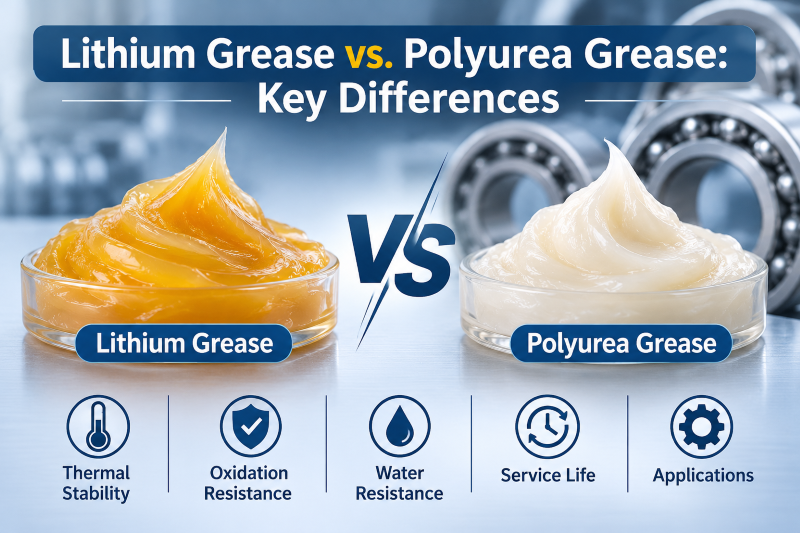
Lithium Grease vs. Polyurea Grease: Key Differences
Related Article